Facilitation Design for Whole Systems
What is a whole systems approach?
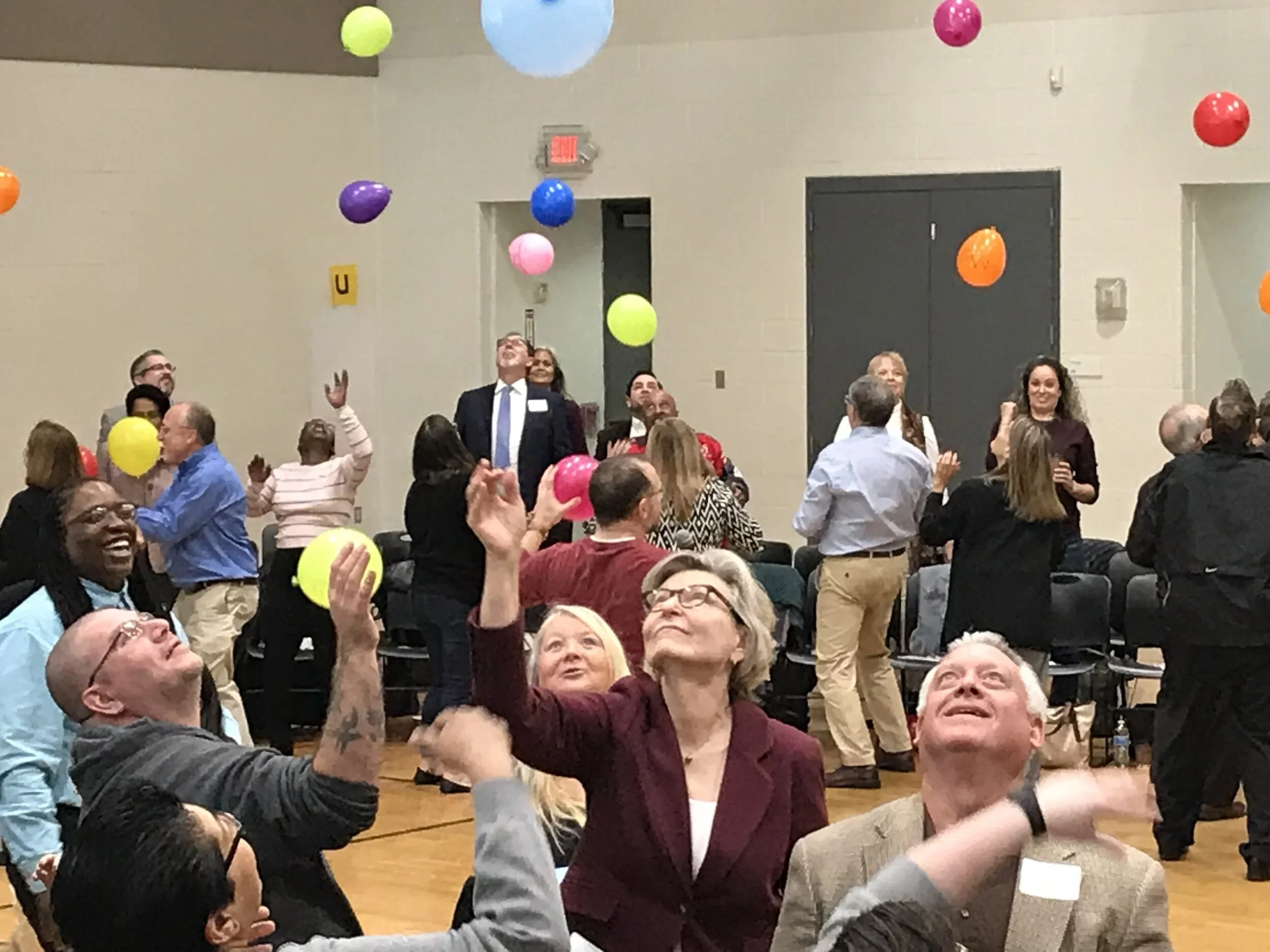
A whole systems approach is a collaborative method that brings together representative stakeholders or an entire community to co-create solutions to address their unique needs, challenges, and goals.
A whole systems approach assumes that “the knowledge is in the room” and that participants already have everything they need to create a successful solution, idea, or initiative. All they need is the path to get them there and a guide to show them the way.
Example whole systems approaches include:
Open Space Technology
World Café
Future Search
Appreciative Inquiry Summit
Design Sprint
Hackathon
What is human-centered design?
Human-centered design places the user at the center of any design process.
A good human-centered design process starts with empathy. It can involve interviews, observation, role-playing, and other activities to help put participants in the users’ shoes.
With the user at the center, participants can brainstorm from a common ground and increase the likelihood that ideas, prototypes, and solutions will adequately serve their customers and communities.
Why use whole systems and human-centered design approaches?
By bringing together whole systems and human-centered design, we have a recipe for user-centered, community-driven innovation.
The whole systems model provides the container to frame the experience. Human-centered design activities provide the ingredients of what participants will do during the experience. The participants provide their knowledge and energy for action.
Ideas generated using human-centered, whole systems design are more likely to stick and succeed than other methods because they grow from the minds and hearts of those who benefit from them.
Final products from a human-centered, whole systems approach might include:
Rough-and-ready prototypes with constructive, experiment-driven feedback
Roadmaps for solution design, iteration, and delivery
A handbook of ideas and solutions ready to be tested
Committed and motivated action teams who will continue prioritized initiatives
Where does leadership fit in the process?
Active, genuine leadership is key.
Leaders set the tone and a guiding vision. They provide the scope and boundaries within which participants can create.
To encourage participant engagement, leaders should offer vision and direction (not solutions) and show willingness to embrace the outcomes participants design. At a minimum, leaders must demonstrate that all ideas will be considered carefully for their merits and potential impact.
⭐️ Transparency in the type of decision being made is critical for effective decision-making and good leadership. For more, check out our blog Reframing Team Decision-Making: Collaborative Decisions Made Easy.
What do I need to consider when planning an approach like this?
Number of Participants
Whole systems approaches can accommodate groups of any size, from 5 to 5,000. The Girl Scouts of America are known for having successfully led the largest Open Space conference to date with around 2,000 participants.
Duration
A minimum of a half-day (four hours) is needed to engage participants in meaningful conversation. Two-and-a-half-day to three-day sessions offer the highest value yield for bringing people together. The first day allows for deep analysis of past and current trends. On the second day, participants envision the ideal future and enter creative design space. On the third day, participants refine their designs and create next steps and actions.
Space
A large ballroom or gymnasium is preferable to auditorium or theatre seating. Participants must be able to see each other and work together in small groups. Roundtables with chairs and/or modular furniture are best. Plenty of wall space and good lighting are also important.
Case Studies of a Whole Systems Approach
Content and use cases created in partnership with Lizard Brain.
Case Study #1: Homelessness Intervention Summit
Facilitators partnered with consultants who specialize in homelessness interventions to design and facilitate a one-day session aimed to address homelessness in a major city in Texas. Around 160 community members, social service providers, faith leaders, policy makers, and the homeless participated. Facilitators proposed several whole-systems facilitation approaches for the client to choose from. Ultimately, Open Space was preferred in order to best accommodate the maximum number of potential topics and conversations. Several topics were provided in advance through interviews that the consultants completed. After a brief energizer and introduction activity, participants introduced topics and began sessions. Around 50 sessions in total were held over the day. Participants captured notes on flipcharts and action lists. As a result, several participants reported that they felt like they were fully engaged. All notes, flipcharts, and contact lists charts were compiled and reported back to the planning committee who incorporated them into their strategic plans. Participants were given the notes as well as were encouraged to reach out to fellow participants; email lists were provided.
Case Study #2: Public Health Opioid Conference
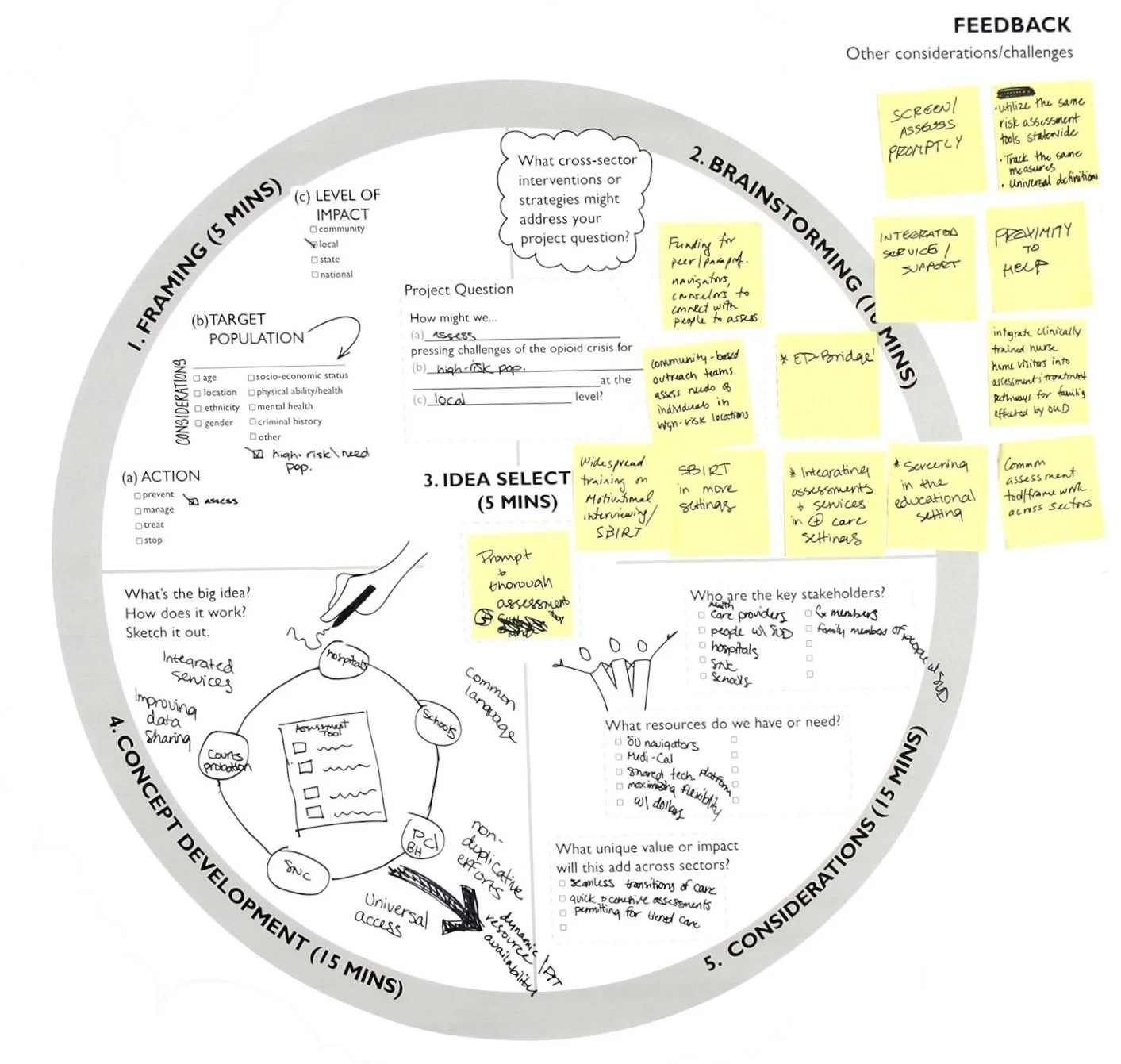
A national public health organization brought together stakeholders from public health, health care, and criminal justice organizations to address the national opioid epidemic. Facilitators worked with leadership and conference organizers to design a one-hour visual tabletop activity for 300 participants. The objective was for participants at each table to design a solution to address the opioid epidemic for a target population group of their choice. The activity was facilitated as a fast-paced design session, which forced creativity within a limited time window. The table-top template was a key element that guided participants through the process of designing a problem statement, brainstorming solutions, building a prototype, and noting key resources and limitations of their design. At the end of one hour, 50 ideas were posted around the room. Participants were given copies of all of the templates and encouraged to take action on the ideas they were most excited by at their home organizations.
Case Study #3: Medical Research Institute Managers’ Meeting
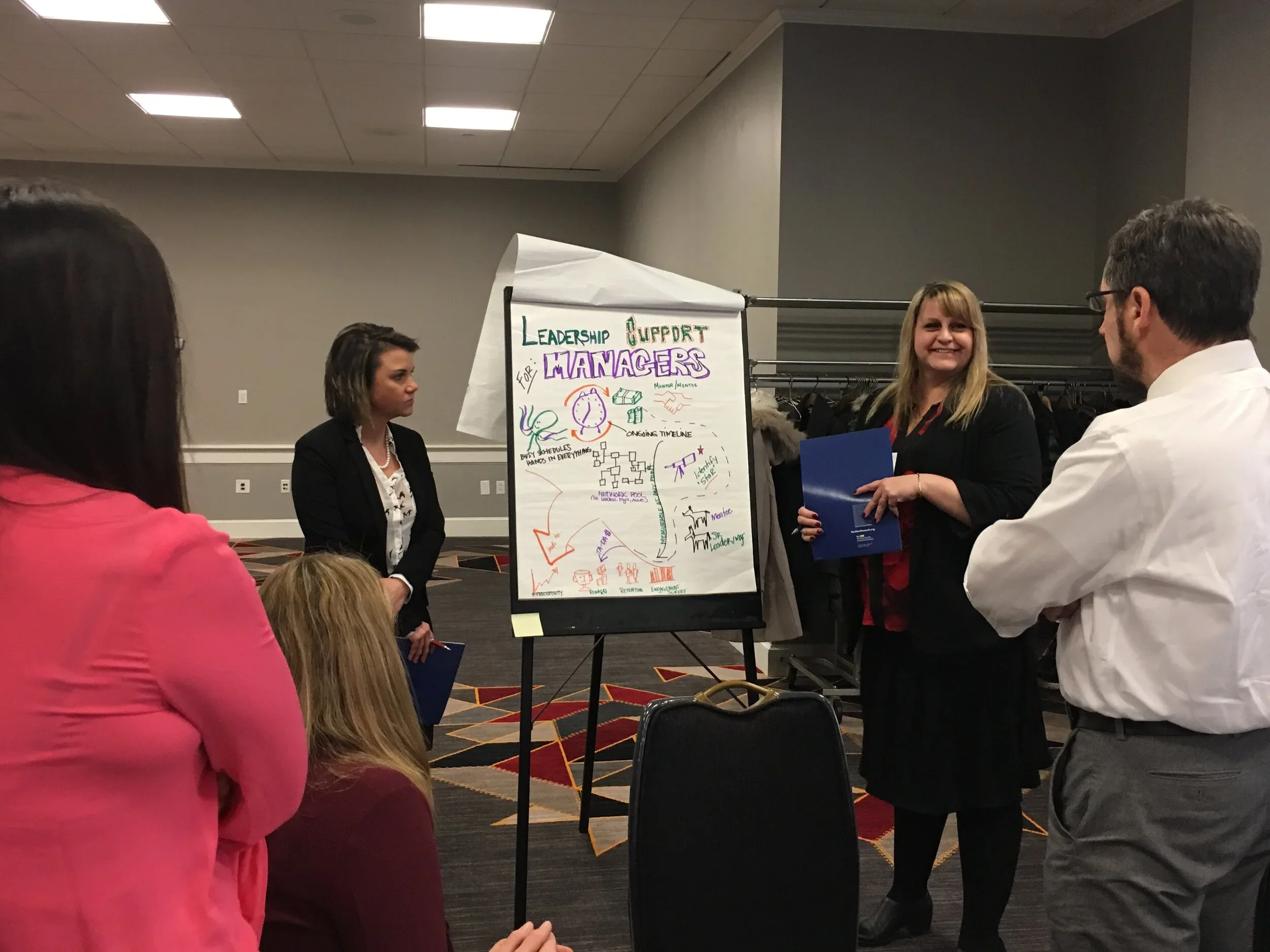
A state-level medical institution wanted to empower managers to get involved in internal culture change and to take initiative in areas that were important to them. Facilitators led a half-day Open Space-style session in which participants identified 20 areas of interest and had conversations around each. Participants captured notes and actions for each area, which were turned into proceedings and distributed post-meeting. Forward movement was made on a few of the core areas in the weeks following. Facilitators led a follow-on working session to turn the initial ideas into actionable solutions. Planning committee members expressed appreciation for both the process and the visual tools that helped the group become a close-knit management team and achieve more collectively than in the past.
Case Study #4: Health Association Community Health Task Force
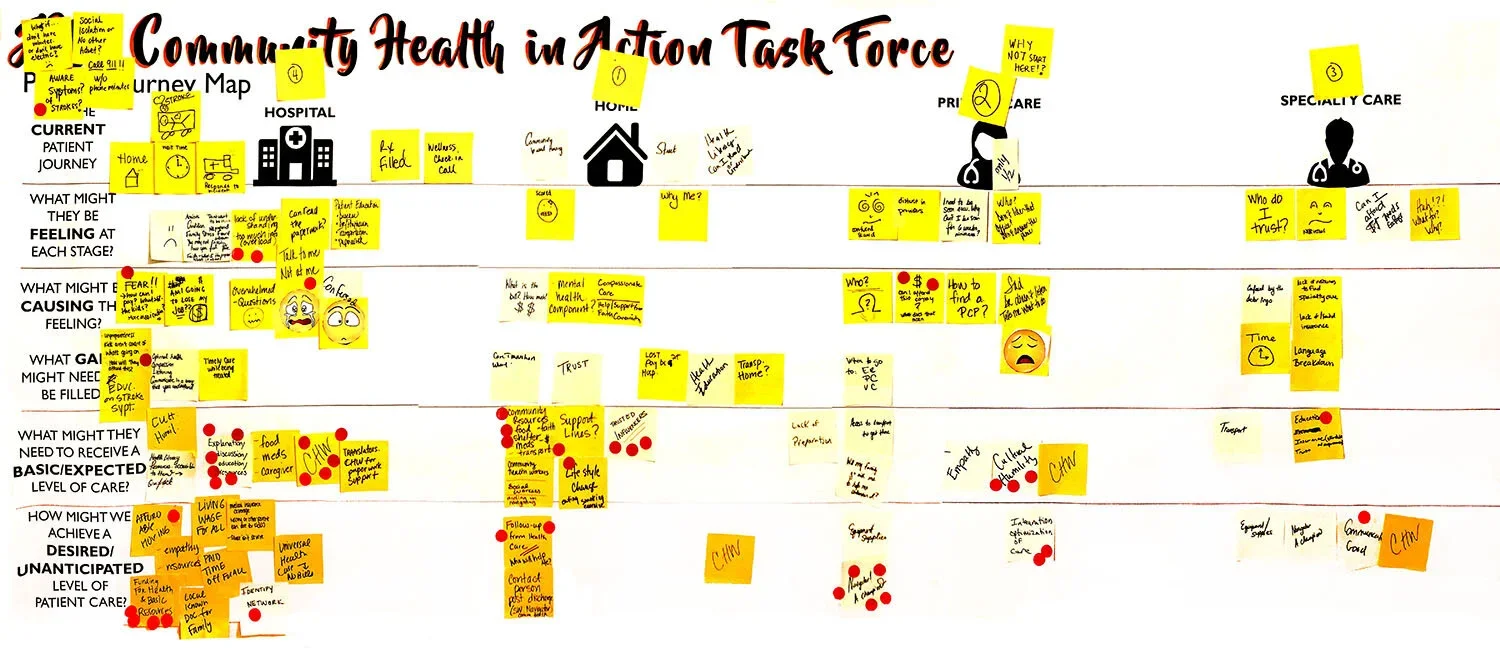
Facilitators led a community action committee meeting of twenty people through a half-day process aimed at better understanding the patient journey from hospital to home and to primary care and specialty care service providers. A customized visual was created to facilitate the conversation. Participants worked in groups to identify key gaps, areas of focus, and how to provide better service to patients. Groups reported out, and key insights were harvested onto a large wall chart. The wall chart was redrawn digitally and used as a guiding visual for future conversations. The board leader used the visual to springboard strategic planning for 2019. Participants reported that they liked the format and felt like they achieved maximum conversation potential through the activity.
Resources for Further Study
Best Practices for Facilitation (Grove Consultants International)
Crucial Conversations (Kerry Patterson and Joseph Grenny)
Design a Better Business (Justin Lokitz, Lisa Kay Solomon, and Patrick Van Der Pijl)
Future Search: An Action Guide to Finding Common Ground in Organizations and Communities (Marvin Weisbord and Sandra Janoff)
Innovating for People: Handbook of Human-Centered Design Methods (LUMA Institute)
Open Space Technology: A User's Guide (Harrison Owen)
Reinventing Organizations (Frederic Laloux)
The Change Handbook (Peggy Holman, Tom Devane, Steven Cady, and William A. Adams)
The Facilitator's Guide to Participatory Decision Making (Sam Kaner)
The Fifth Discipline (Peter Senge)
Visual Meetings (David Sibbet)
As an Amazon Associate, we earn from qualifying purchases using links included in this blog.
Designing a meeting is designing for the outcomes you want to achieve and the experience you want participants to have. Let our meeting experts guide you through the process with Design and Facilitation. Learn more.