Not Every Meeting is a Meeting
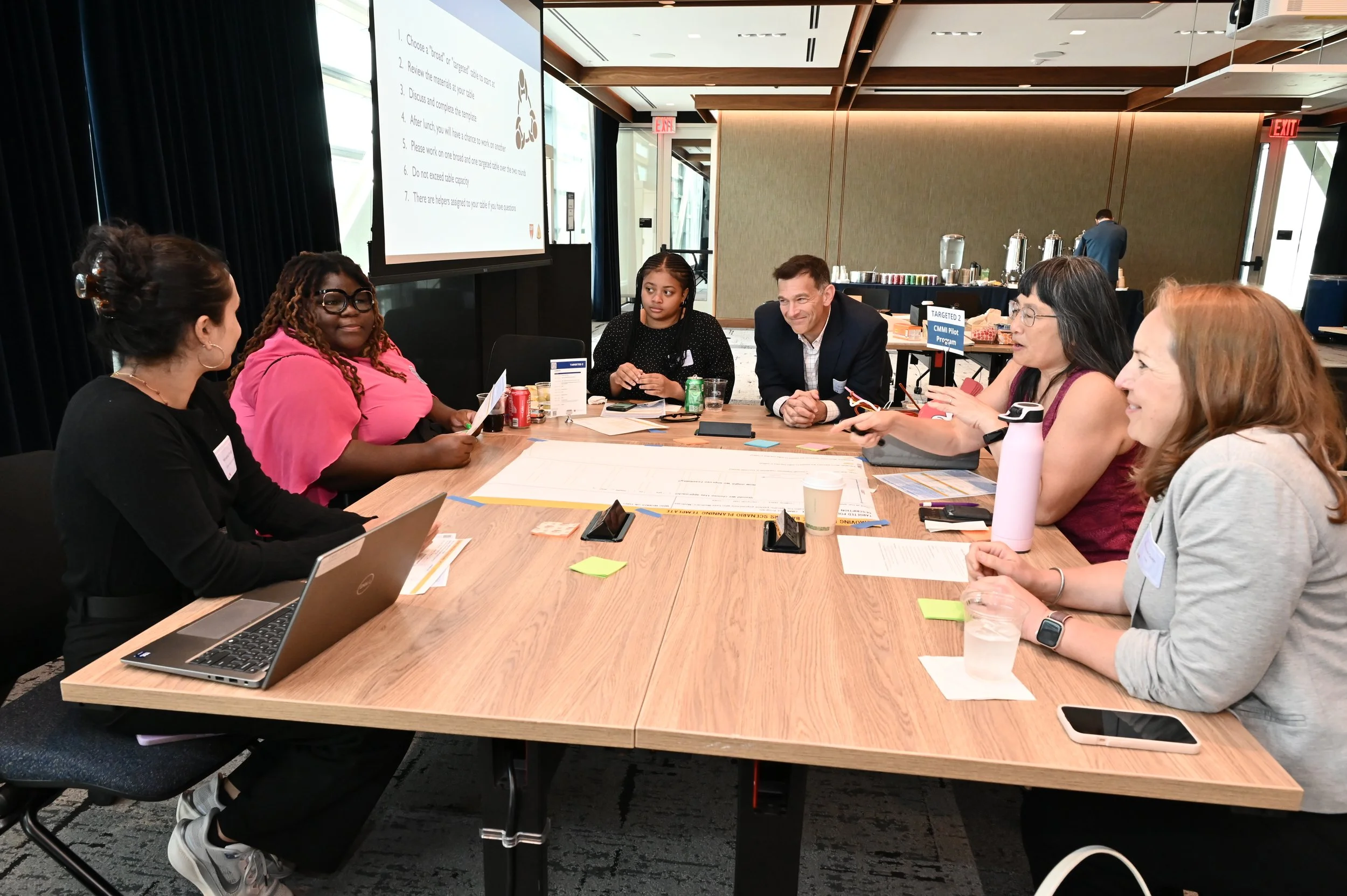
Communication looks different for everyone. Many assume that “communicating” something requires a meeting. Scheduling a meeting becomes the default response to ensure “communication” happens, and it is often never questioned.
The result is an overbooked calendar and meeting burnout.
Meetings serve an important function for creating space, but they are not the answer to every communication need. There are a number of alternatives your team can turn to that ensure reliable communication and collaboration without a meeting.
What is a Meeting?
A meeting is a gathering where people, often a team, come together synchronously to work on or decide something.
Synchronous means working on something at the same time or in the same space (physical or virtual). Things like brainstorming, information gathering, and decision-making are easier to do synchronously because they may involve a lot of back-and-forth or require clarification. These conversations are inherently collaborative and multi-directional, so a meeting is the best medium.
Anything requiring only one-way communication, from quick updates to longer presentations, may not require an actual meeting. Take a look at your meeting calendar. Can you say honestly that every meeting you have requires synchronous, collaborative work?
What is the Value of a Meeting?
That doesn’t mean we never need to have a meeting. There are plenty of instances when shared time and collaboration make sense.
Albert Mehrabian's communication model states that only 7% of meaning can be conveyed in words alone. This is because tone, facial expressions, and body language are critical aspects of effective communication. That means at some point, simply sending a text, instant message, or email will not cut it.
Imagine you send an email to 10 people asking for design feedback. One by one, they start replying to your note. One person replies to you. One person replies to all. Then two people reply to them and not to your original note. If this is happening, it’s a clear sign that the conversation would benefit from a meeting, even a short one, so that everyone can respond at the same time and build shared understanding.
Why We Have So Many Meetings
According to Joseph Allen, PhD and Karin Reed, meeting volume has increased by 252% since the COVID-19 pandemic. Moving to a more remote work environment meant more meetings to replace what would have been “water cooler” talk or drive-by ad hoc conversations. Now, instead of quick passing conversations as needed, we have Zoom fatigue.
Return-to-office trends theoretically mean that teams see fewer meetings on their calendar, but this requires an audit of meeting cadences. For a process and template for auditing team meetings, check out our blog “Boosting Team Connection.”
Every organization has its own meeting culture—often unspoken norms around meeting scheduling, behaviors, and other protocols. A common one is Meeting “FOMO” (fear of missing out). People in organizations with Meeting FOMO may notice that they invite others to meetings to avoid making the others feel left out or excluded. When this behavior becomes ingrained, it’s very difficult to undo.
In The Art of Gathering, Priya Parker discusses this phenomenon and offers an alternative argument: By including everyone, the meeting becomes perpetually un-inclusive. In a larger meeting, not everyone can be heard, and the voices that may be truly central to the topic at hand are dimmed.
Similarly, many organizations suffer from the phenomenon of “Meeting Bloat,” often used by Joseph Allen, PhD, to describe situations where people are included to be kept in the loop, not necessarily to weigh in. If someone is simply there to be informed, arguably, this could happen in another format.
Most recently, Carrie Goucher, PhD, coined the term “Collabureacracy,” identifying the tendency to create additional meetings (layers of collaboration) in the name of inclusion, which—if not well-managed—actually stifles risk-taking and prevents progress. In short, when collaboration is not well-managed, it can add unnecessary bureaucracy.
Similarly, many organizations suffer from what Joshua Turner calls “Collaboration Theatre,” where a group aims to foster collaboration but doesn’t model the behaviors needed to practice it. Think about a meeting you were a part of when the ideas didn’t actually get used, or when you were part of a “strategic planning session” where the group’s inputs were not actualized in the final decisions made by leadership.
When to NOT Meet
To overcome COVID-19 meeting overload, Meeting FOMO, Meeting Bloat, and Collabureacray/Collaboration Theatre, we need to take a deeper look at three things:
What is it that we think requires meeting?
What decision protocol makes the most sense?
Who is truly necessary for the conversation?
What is it that we think requires meeting?
If you answer no to any of the following, consider a meeting alternative (detailed below):
Can what I have to say be expressed in a few words?
Will a simple confirmation or acknowledgment of the message meet my expectations?
Will what I have to say or ask be received without many questions or concerns?
Is the impact of what I have to ask or tell limited to just a few people?
For a quick check on this, bookmark our quiz: “Should we text, email, call or meet about this?”, which will give you an instant recommendation on what format your topic or issue should take.
What decision protocol makes the most sense?
Team decision-making is great, but it takes time. When time is of the essence, it's often best for one or a few leaders to make a decision. Many people don't care if their input is included in a decision, but they do care if it's requested and not used.
A quicker way to reach a collaborative decision that works for most is to brainstorm asynchronously using a poll or other shared format, and engage a few key decision-makers in the final decision process.
Determine which decision model works best and align your meeting to it. For help, check out our blog “Reframing Team Decision-Making: Collaborative Decisions Made Easy.”
Who is truly necessary for the conversation?
As meeting size grows, the ability to control and contain the process decreases. For most routine meetings, asking these two questions will get you to the right list of people:
Who is routinely working together on this project or effort?
Who should be included in the routine decision-making process?
For complex meetings or processes, use the A.R.E.I.N. model from Marvin Weisbord and Sandra Janoff’s Don’t Just Do Something, Stand There. Invite those who have either:
Authority to act
Resources (contacts, time, or money)
Expertise
Information about a topic that no others have
Need to be involved because they will be affected
Meeting Alternatives
Labelling something a meeting automatically alters behavior and expectations going in. When we know we are having a “meeting,” we expect an agenda, a clear outcome, and someone to guide the process.
Instead of calling something a meeting, create “co-working time” or “office hours.” In other words, casual time that mirrors a lean over the cubicle wall. This time might follow your weekly meeting for ad hoc small-group or pair work. The expectation is that there is no agenda—it’s just about working together or answering questions outside of a formal meeting structure.
A tip from Carrie Goucher, PhD: For groups who utilize instant messaging tools well, update meetings could be replaced with a weekly check-in “chat”—where each person shares a quick bulleted list of what they are working on and what they need help with.
For information sharing that doesn’t require more than awareness or a timely response, Goucher also suggests practicing good email etiquette with a “scannable email.”
A scannable email highlights three things:
What happened
Why the reader should care
What they need to do
To add more depth and meaning to emails, we recommend recording videos using an application like Loom, an easy-to-use screen recording tool. We often will record a talk-through of long emails for readers who might be more audio-oriented. This is also a great tool for covering presentation content ahead of the meeting.
For more tips on meeting alternatives, check out Carrie Goucher’s “Friction Free” newsletter.
How to Suggest an Alternative
If you hold a position of authority or run your own meetings, shifting the structure is likely easy. But if you’re a participant in meetings without much designated authority, you still have agency over what you say yes to and suggest alternatives.
Ask the meeting owner one (or more) of the following:
What do you hope this meeting will accomplish?
Is this more for awareness, or are we collaborating/making a decision?
What do you hope my contribution will be to this meeting?
These questions signal to the meeting owner that they could be more clear in the goals of the meeting, and based on their response, allow you to quickly respond to the need using another format (email, chat, filming a video) and ask if, based on your response, your presence is still needed.
And if you think that suggesting an alternative to meeting would be received well, you could add:
Can I send written feedback in advance?
Would it help if I summarized my thoughts in a quick video?
I’m happy to review notes and chime in afterward.
Could we collect input asynchronously and meet only if needed?
I can weigh in on the doc rather than join live.
Meetings should be a tool for meaningful collaboration, not a default for every communication need. When we set thoughtful boundaries, we protect focus, improve decisions, and make the time we do spend together actually work.
If you’re a leader looking to transform your meetings and grow your toolkit, check out our One-on-One Training options for personalized coaching and feedback.
You May Also Like
As an Amazon Associate, we earn from qualifying purchases using links included in this blog.